Blog

  • Untitled post 2755

    Tilman the baker and brewer

    Much has been written of Tilman’s attitude to food, diet and expedition rations. Less well known, except to those who visited him at home in Barmouth, were his abilities as both a baker and brewer. Lunch at Bodowen – particularly welcome after a wet hitch-hike down from Bangor – centred around his home baked wholemeal bread and a quart bottle of a delightful, hoppy, home brewed beer.

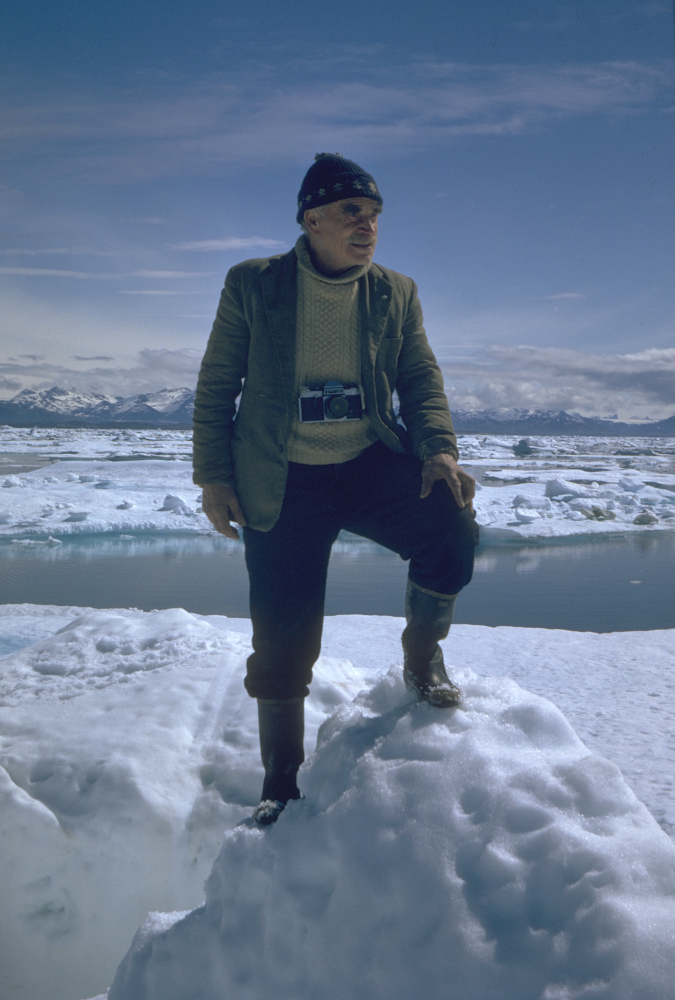
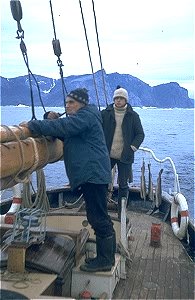
    Lunch would be followed by a walk on the hills behind Bodowen, with black labrador Bella and Toff the terrier as company. The picture here shows Tilman with one of the sheepdogs at Egon Jensen’s farm near Nanortalik in 1970. We spent a few days anchored in a delightful inland fjord here, working on the boat and exploring the local scenery.  The Jensen’s were running an experimental sheep farm in the south west of Greenland, an exercise which benefited from state funding from the Danish government.

    Tilman’s attitude to his crews
    7017

    Tilman’s attitude toward his crews varied in proportion to the extent to which they pulled their weight as part of the team.  Both 1970 and 1971 proved to be good years for crew, but a number of the later voyages were not so fortunate. Where friction between crew and skipper became a problem, it was probably attributable to the crew containing a disproportionate quantity of ‘professional yachtsmen’ rather than ‘seamen’.  The climbing members of the crews knew what to expect, trusted the skipper, and respected his judgment. The yachtsmen among the crew tended to question his actions and doubt his judgment.

    Professional sailing experience wasn’t a skill accorded particularly high value by Tilman during his search for a good crew. What he looked for, usually with limited success, was the strength of character and attitude which would survive four months with four other men in an old 40 foot boat in cold, damp surroundings – hopefully working together as a viable team in the process.  When a good team came together, it was largely as a result of efforts on the part of the crew themselves. Tilman himself did not go out of his way to foster team spirit in his crews and was not, in my view, a natural leader in the sense of being a commander. He was an individual who set himself very high standards of achievement and simply expected others to follow that lead as a matter of course.  When they sometimes refused, he seems to have been taken by surprise. When they stepped up to the challenge, as they did to varying degrees on both of the trips that I made with him, then the team which resulted was close and effective.

    The Biographies

    I have been disappointed with each of the biographies.  JRL Anderson’s writing in the Guardian, and particularly his “Vinland Voyage” was something of an inspiration to me when at school, so I already had some respect for him. The first year I sailed with HWT, he published a book  called ‘The Ulysses Factor’ , a copy of which my parents gave me for Christmas that year.  The book, which tried to link the character traits of a number of twentieth century explorers to some common factor, met with a stream of invective from Tilman, one of the subjects.  The first official biography, also by Anderson, “High Mountains and Cold Seas” took that theme further and while it was a pretty well researched account, the style irritated me.  (Strangely, after my father-in-law died some years ago, while sorting out his collection of tapes, I came across a cassette of a Radio 4 adaptation of the book – complete with ‘Ripping Yarns’ accents and sound effects. It was positively dreadful and the subject would have disowned it.)

    The only television documentary to date, by John Mead who at that time worked with Harlech Television, made a promising start. John took the effort to track down a number of former friends and companions of Tilman, and came down to take a look through my colour transparencies. He took about 30 away to use for rostrum camera shots for his documentary, but none found their way into the finished  program.  The high point of the visit to the HTV studios for me was undoubtedly a conversation over lunch with Noel Odell – a perfect gentleman.  The same session included Jim Lovegrove from the 1958 ‘Circumnavigation of Africa’, Ian Duckworth, the unfortunate scapegoat for the loss of Mischief,  and Pam Davies, Tilman’s neice.  The program suffered from being far too short – 53 minutes in which to attempt to cram in such a full life – a slightly better chance than Radio 4’s 30 minute farce – but nevertheless way too short.

    I guess the difficulty with external interpretation of the original text is that the style is so deliciously dry and dismissive. On the outward voyage in ’70, there was a comment which ran something like “nothing much of note occurred, except for the night when Bob woke me up to look at a distant luminous object which I had no difficulty in pronouncing to be the rising moon”. In reality, we were closing Cape Farewell for the first time and he’d warned us to look out for ice, suspecting that there would be the odd berg coming down with the east Greenland current. He took the watch after mine and at the turn of the watch I remarked that I’d seen this strange luminous object on the starboard bow. It had long since disappeared (risen behind the low cloud on the horizon?), but he himself suggested it might have been the last rays of the sun catching on a berg. It was midday the following day, having spent an hour studying the chart and tables, that he suggested it ‘might have been the moon’.

    In November 1998, the magazine Yachting World published an article by Tim Madge, effectively a precis of his 1995 biography,  marking – somewhat belatedly – the centenary of Tilman’s birth – February 14th 1898. This article contained a comment about Mischief being “clapped out”, reawakening the kind of comments which are regularly made about Tilman and his boats. In a letter to the editor,  Andrew Craig-Bennett, who like myself took exception to this reference, wrote the following comments:

    “Tilman was not so very inexperienced when he bought Mischief.  He had learned his cruising and navigation from Robert Somerset, who had owned Jolie Brise and at that time owned Iolaire.  He bought Mischief from Ernle Bradford, the writer best known for his account of the siege of Malta, on the recommendation of Humphrey Barton,  to whom he had explained exactly the voyage he planned to  undertake. She (and Sea Breeze) were surveyed for him by John Tew whose recommendations were carried out by the Berthon.  In other words, he placed his requirements in the hands of the firm of Laurent Giles and Partners at the very height of their prestige. Mischief was not so very “clapped” and her owner was elected to the Royal Crusing Club pretty smartly!

    Tilman wrote his sailing books in a style which is a deliberate pastiche of the “typical” voyage accounts of the day (engines “refusing to start”, etc!) and they are all the funnier for that.    Unfortunately, Dr Madge takes it all seriously, invents drama where there was none and perforce repeats the myth of the crabbed, barely competent, misanthrope “out of touch with the times”, a persona which Tilman enjoyed creating but which was not the man who, at 76, would sit over his pint and pipe in a Lymington pub and tell amusing but unrepeatable stories!”

    Bill Tilman had the good fortune, by birth, to have the private income to do as he wished. He had the equally poor fortune, by birth,  to have been caught up in a war that devastated much of his peer community. His reaction was simply to make the best of a bad job, in which endeavour his sublime sense of humour clearly stood him in good stead. His own accounts of some of those wartime exploits, told over drinks on Saturday evenings in high latitudes – once the crew had earned his confidence – don’t always square with the interpretations of biographers who perhaps never worked with him.

    I wouldn’t attempt to judge his achievements in Africa, the Himalayas, Yugoslavia & Albania, but as one who sailed over ten thousand miles with him on Sea Breeze,  I believe I can speak with some authority on his later achievements as a sailor. Like Andrew Craig-Bennett, I am less than impressed by those who would pass him off as some kind of rank amateur in this field.  That he did nothing to dispel this myth owes much to his natural modesty and mischievous sense of humour. In reality, as owner and master of a well maintained traditional working boat, he displayed levels of seamanship, ship husbandry and navigation which would put him head and shoulders above most of the readership of the popular yachting press.  Apart from very rare occasions when tiredness may have clouded his judgment, his decisions were well timed, appropriate, and executed with all due care. The degree to which voyages could be classed successful was directly proportional to the level of trust and loyalty displayed by his crews. Those crews which gave him the benefit of any doubt, and put in the level of effort which he had a right to expect, were rewarded with some memorable experiences. Those which didn’t, were probably never pushed – resulting in some of the ‘comparatively humdrum’ voyages of later years. Sadly, Tim Madge’s biography seemed to have sought input from mainly the latter group.

    A few personal observations

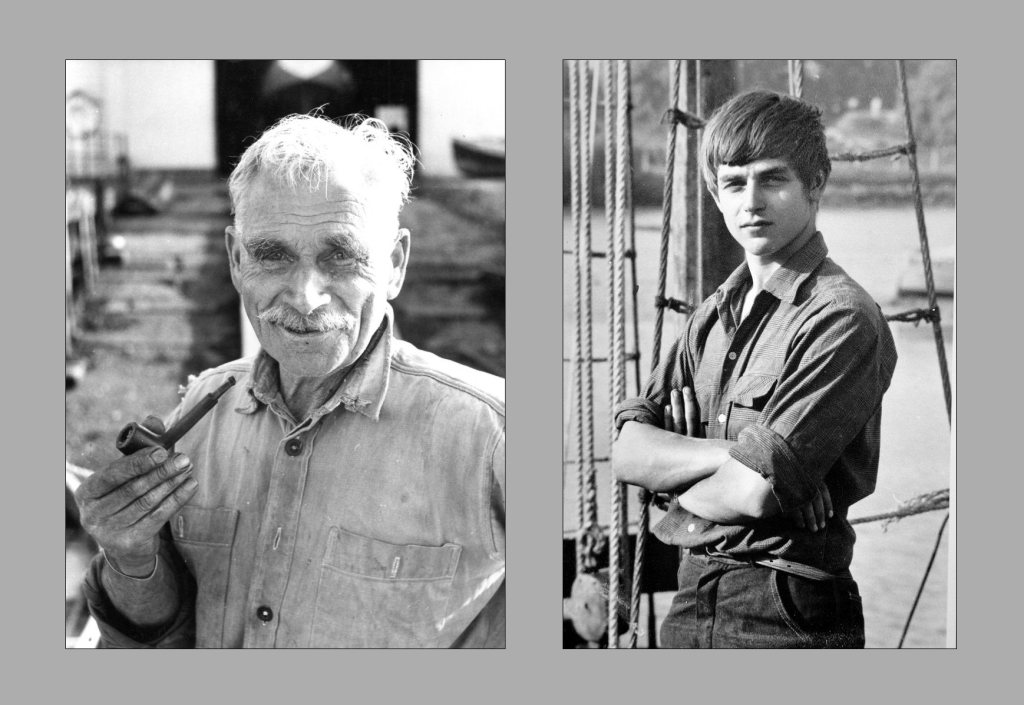
    I first met Bill Tilman when I was 17 – “between school and university, slightly built – not likely to break a rope by heaving on it” – to quote his own first impression of me. At Christmas, 1969, I was at a loose end. I’d already qualified for a place at the University of Wales starting in September 1970 and a small crew notice in the Sail Training Association journal caught my eye. The skipper and vessel in need of a crew were one Major Bill Tilman and the Bristol Channel pilot cutter “Sea Breeze” which having been launched in 1899, proved to be a year younger than her owner. We exchanged letters, and in February I met him on the boat alongside the Berthon quay on the Lymington River. By the time we met, I’d already tracked down a couple of his books and thought I had formed a fairly accurate picture of both boat and owner – the latter illustrated by the old photograph which appeared on the back cover of each of his books.  The boat held few surprises but I confess that I was somewhat taken aback by the appearance of the skipper – older at 70 and hardly a giant himself.

    A quiet unassuming man – easy to overlook, even in a small group, until he chose his opportunity to raise the level of conversation with some perfectly timed and apt remark. His quick wit, often at his own expense, would be accompanied by a mischievous grin around the stem of an F & T pipe – of which he had a regular source of manufacturers rejects.

    As a seaman, he was an old fashioned, unpretentious working-boat sailor – one whose preferred reference work was Captain Lecky’s “Wrinkles on Practical Navigation”.  He viewed himself, and often portrayed himself, as an amateur, but anyone seeing him quietly going about the day to day maintenance which the old cutter required, would not help being impressed with the skills he’d picked up. The first few days out of Lymington, he spent many hours on either tack, hard at work with a marlin spike gradually setting up the deadeyes and lanyards at the foot of the shrouds. There were numerous other aspects of what was really historic ship maintenance in which he’d developed a high degree of competence, including repairs to the heavy flax canvas sails and the splicing of halyards and sheets. At the end of the trip, he’d take assorted blocks home for winter repairs – rarely trusting the boatyard with such items – and return the next season with newly made canvas buckets and other practical items.

    He was perfectly in tune with the boat, and never pushed her beyond reasonable limits in due consideration of her age.  On night watches we sailed single handed, and with a freshening wind and too much sail on, the watch-keeper would normally need to call up assistance to take a reef in the heavy gaff main. Invariably, even in the midst of a deep sleep, Tilman would sense the need for action and would simply appear on deck unprompted.

    There was a caring side to his character which is rarely documented, but to which I can testify.  His genuine pleasure in my decision to sail with him for a second time was tempered with a genuine level of almost parental concern when I made a move to sign up for a third successive northern cruise. During the second trip, I’d received news that I’d failed a key university examination paper – taken in haste the day before making the almost pierhead jump onto the boat. Since I couldn’t return to England to retake the paper, I was effectively thrown out of college – something that he unfairly believed was his personal responsibility.  I clearly remember sitting in the saloon, alongside the harbour wall in Reykjavik, shortly after hearing this news, with Tilman asking me whether it would help if he wrote to Charles Evans, his former climbing partner and at that time Principal of the University College of North Wales. At the time, neither of us thought it a proper course of action but it was, nevertheless, an indication of his level of concern at my predicament. (Interestingly, after we returned, I went cap in hand to see Sir Charles who, when he heard whose company I’d been in,  made it abundantly clear that it was time I got my academic priorities in order!)

    The voyages and conversations with Tilman left their mark, and have long since been a major influence on the way in which I treat working relationships. As a yardstick, the “how would this person fit on a high latitude small boat voyage for four months” test is a better test of a team member than any glowing inventory of skills – most of which can be acquired in time of need. Like Tilman,  however, I sometimes still get that badly wrong!

    He was clearly relieved when I started to settle down into a career in IT, although I suspect he’d have been horrified at the prospect of my still being there 35 years later!  That nearly didn’t happen back in 1977, when he shipped with Simon Richardson on “En Avant” for the ill-fated voyage south.  I came close to joining them on that voyage, but concerns about the boat got the better of me and I quietly withdrew and completed the settling down process by getting married instead.

  • Out of the blue, into the fan

    Subscribe to continue reading

    Subscribe to get access to the rest of this post and other subscriber-only content.

  • South West Greenland – 1970

    South West Greenland – 1970

    Passage plan

    Lymington – Frederikshaab – Nanortalik – Julianhaab – Arsuk – Ivigtut – Prins Christian Sund – Lymington

    Crew:

    Colin Putt – Australia
    Iain Dillon – New Zealand
    Bob Comlay – UK
    Andrew Harwich (Cook) – UK


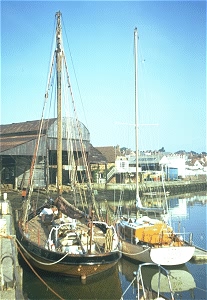
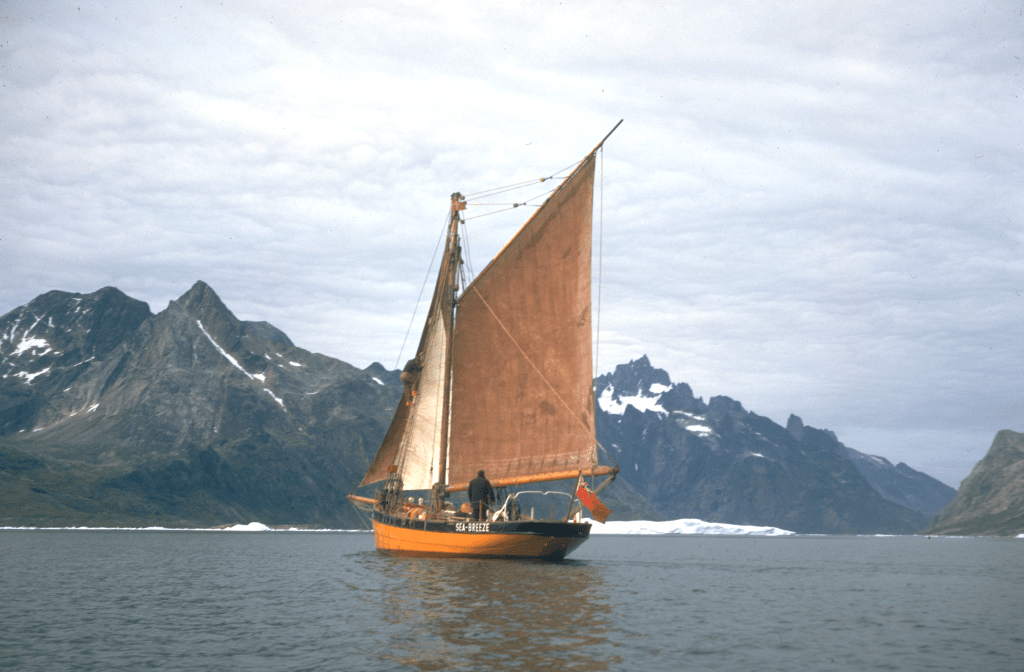
    The Bristol Pilot Cutter Sea Breeze at the Berthon Boat Yard, Lymington, shortly before we sailed at the end of May 1970. The deck had been covered in countless layers of blistered and cracked paint which we’d spent a solid week scraping clean and “holy-stoning” while we fitted her out. Stripping the paint off showed how poor the caulking was in the deck seams, and we used yards of caulking cotton and pitch re-sealing the deck. At the end of the day, the deck fastenings themselves were so rotten that the water just poured in through them. Photographs from the 1971 trip show a new coat of deck paint – expensive to apply and of little effect, the water just found new and more interesting places to run in!

    7065

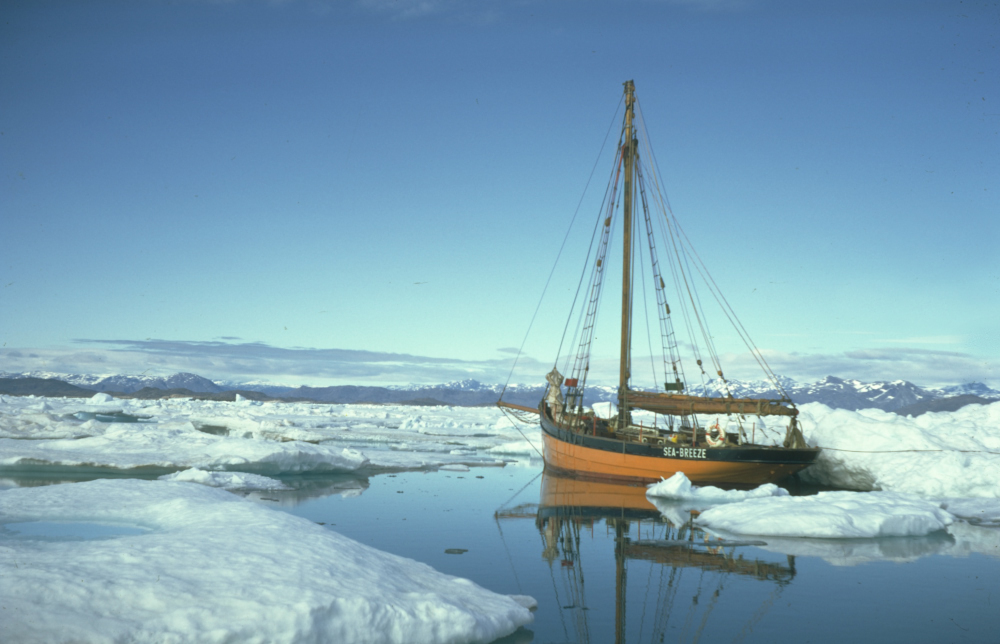
    Her topsides were painted in ‘Mischief Yellow’ – a curious colour for a pilot cutter but one which had become something of a tradition since Tilman’s earlier cutter, Mischief, had been repainted yellow in 1961 – the original cream paint being unavailable for purchase in Gothaab.  The actual ‘recipe’ for Mischief Yellow varied from refit to refit at the Berthon yard in Lymington, with varying shades from bright yellow through to an almost ‘dayglow’ orange.

    The outbound crossing in 1970 gave me my first experience of sailing a Bristol Pilot Cutter – one which was to prove unforgettable in a great many ways. For many of Tilman’s crews, this would have been their first experience of blue water sailing and it’s hardly surprising that some of those crews never quite made the grade.  To crew expecting more in the way of sophisticated navigational instrumentation or modern safety equipment, or to those with little experience and no expectations, she probably appeared frighteningly basic.  However, to anyone reasonably experienced in traditional working boats, Sea Breeze was a delight;  traditionally rigged, with heavy gear but a kindly motion in any kind of sea.


    7060

    The North Atlantic crossing gave ample time to settle into the watch-keeping routine and to get to know the ship.  The rig was simple with the topmast left behind in Lymington, deemed of little use on the North Atlantic crossings and too delicate a spar to have withstood much in the way of weather.  ‘All plain sail’ comprised a heavy flax canvas mainsail and jib, together with an equally heavy terylene staysail. An ill fitting but nevertheless effective second hand lightweight genoa for light airs, a tiny flax storm jib which we never used and the flax topsail  were the only sail changes available to us, the latter re-purposed as a jury mainsail in mid Atlantic while the gaff was under repair.

    Tilman’s account of the three week outbound voyage in ’70 was typically brief, the most significant sentence probably being “nothing much of note occurred, except for the night when Bob woke me up to look at a distant luminous object which I had no difficulty in pronouncing to be the rising moon”.  In reality, we were closing Cape Farewell for the first time and he’d warned us to look out for ice, suspecting that there would be the odd berg coming down with the east Greenland current. He took the watch after mine and at the turn of the watch I remarked that I’d seen this strange luminous object on the starboard bow. It had long since disappeared (risen behind the low cloud on the horizon?), but he himself suggested it might have been the last rays of the sun catching on a berg. It was midday the following day, having spent an hour studying the chart and tables, that he suggested it ‘might have been the moon’

    7045

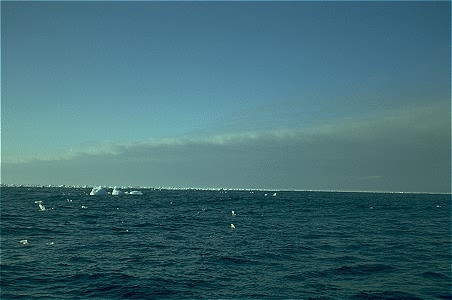
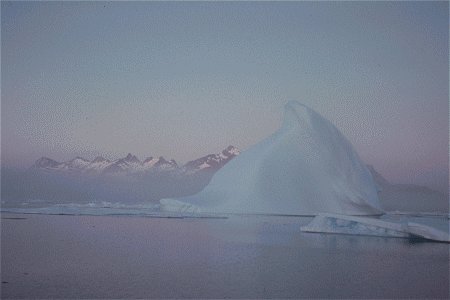
    My first sight of sea ice; the edge of the pack, south west of Cape Farewell, late June 1970. Note the fog rolling off the ice. Even in fog, it’s relatively easy to spot the edge of the pack due to the load noise made by the grinding together of the “growlers” at the edge.  As you get further into the ice, the effect of the waves diminishes and the sea becomes calmer. This required all hands on deck, one in the bow or at the masthead looking out for leads and growlers, the rest armed with poles to fend off ice as we encountered it. In general, sailing was infinitely preferable to motoring. The boat was actually far more manoeuvrable under sail than under power, given the offset propeller, and far quieter. With the Kermouth “Hercules” 2 cylinder diesel running, life below deck was distinctly unpleasant !

    After rounding Cape Farewell and making the latitude of Julianhaab, we headed back east in toward the coast, hoping to make an easy landfall and set the climbers ashore. However, we hadn’t bargained on finding what turned out to be the worst ice conditions on the coast for several years.

    7003

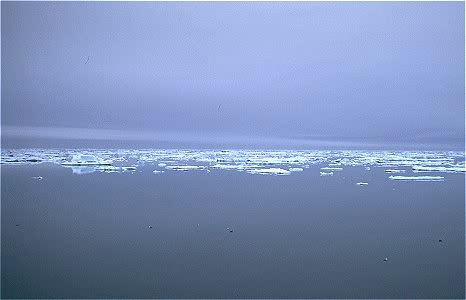
    Somewhere in the region of Julianehaab in South West Greenland. At the time we were around 40-50 miles from the coast, and were searching for the ‘shore lead’ which during summer runs parallel with, and close to, the coastline. It provides an ice free channel – protected from the open see by the pack ice outside – through which local ferry traffic and fishing boats are supposed – according to the Arctic Pilot – to be able to make easy passage.

    Shipping trying to get into the various small ports and fjords need to find a route through the pack ice, then follow the shore lead north or south to their destination. Easier said than done!

    What looks relatively open pack here actually is a little more tricky. The tongues which protrude from the floes beneath the water, together with the fact that the ice itself is constantly moving, makes keeping a sharp lookout from aloft essential. An hour or so with feet jammed into the shrouds at the masthead, shouting directions to the man on the helm, was tiring work.

    7022

    When sailing in relatively open water, we had a few close encounters with small pieces of floating ice, sometimes tricky to spot if there was much in the way of surface waves. A small piece the size of a small car could do significant damage if struck, but floating mostly below the surface could be very difficult to spot.  A sharp lookout was needed from a man in the bow, armed with a long ice pole, was invaluable here since the view ahead from the cockpit was limited when under sail.  At mealtimes and during the short murky night, we moored to floes using a simple, well rehearsed manoeuvre. Running under motor, we would drop a man from the bowsprit, and land him on a suitable floe with an ice axe. He would then select a suitable natural outcrop of ice, using the axe to help sculpt a bollard. We would then pass him a warp which he’d make fast so we could pull ourselves back in and bring him back aboard. These ice bollards were easily strong enough to hold the weight of the vessel.

    Robin Knox-Johnston gives an account of a Greenland voyage where he used anchor and chain on a floe. To test the strength of the ‘mooring’ he motored back from the edge, pulling the chain taut, and his comments about ‘fly fishing with an anchor and chain’ tell the rest of the story!

    img0013

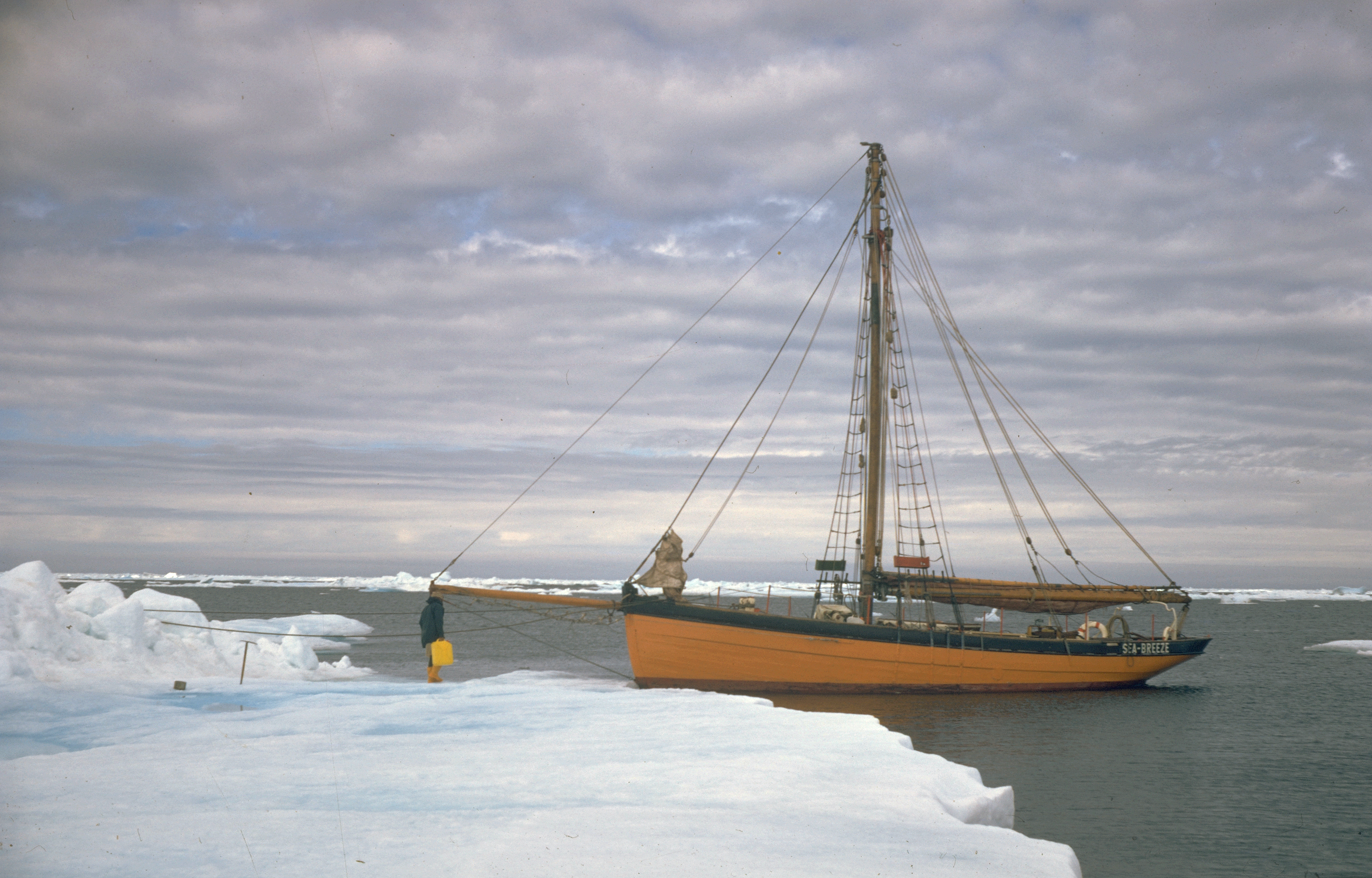
    The photograph above was taken from the ‘summit’ of a floe against which we lay for a week, the ice having closed in around us. We had managed to manoeuvre the boat into a position where two reasonably large floes touched beneath the keel, providing in effect a floating dock in which we lay reasonably snug for the week. Initial misgivings, and the occasional strange creak from the hull, caused us to start making evacuation plans, but in the end, when the fog lifted, the land became visible and the sky turned blue, we relaxed a little. The main fear actually became the fear that we’d be spotted by one of the many small planes which occasionally flew over the ice, recording the unusual ice conditions. The prospect of being the unwitting objects of an unnecessary and unwelcome ‘rescue’ mission was one which appealed to none of us.

    The experience of being ‘beset’ in pack ice was something new for us all, including the Skipper.  He’d had many scrapes with Mischief, particularly outside Angmassilik on the East Coast, but this was the first time that he’d experienced a week drifting with the pack ice.

    On the voyage south from Faringehaven, we stood out to the west, well clear of the pack ice in Davis Straight before heading south. This gave us a few days of sailing, uninterrupted by ice, which after several days of motoring in ice was a distinct pleasure. The only problem was that we all underestimated the distance traveled per watch, her speed under sail being significantly faster than under motor, and by time we realised the distance we’d run, we had overshot the latitude of Arsuk Fjord by a considerable margin. We made our way back to the north before heading east into the coast again. This time there was little in the way of pack ice, and when the coast appeared through the evening mist, we were hard pressed the locate the landfall on the chart. There was a prominent radar installation on the nearest headland which was nowhere to be found on the chart or in the pilot. While Tilman’s charts and copies of the Arctic Pilot were typically out of date, another probable explanation was that the station was part of the US DEW line (Distant Early Warning) establishments, which never appeared on the charts anyway.

    7001

    We moored to a floe for the hours of dusk, and in the morning sailed slowly into the fjord to find the settlement of Arsuk close to the entrance. Bypassing Arsuk, we headed inland to the mining settlement of Ivigtut.  The product from the mine here was cryolite, a rare material used in the smelting of aluminium. This operation had been the largest cryolite mine in the world, the only other commercial operation being in South Africa.  However, by 1970, the mine at Ivigtut was all but worked out and the main work going on during that summer was the reclamation of ore from previous spoil heaps and from an old jetty, built early from lower grade ore but now deemed worth retrieving.

    When we arrived, a couple of Danes arrived by Land Rover from the mining settlement less than a mile away, bearing invitations to showers and food. HWT declined the invitation, preferring to catch up on his sleep, but the rest of us accepted eagerly. Often on watch, we’d laugh and joke about those dream meals that we would have when we got back home, but by time we left the showers in Ivigtut, which alone would have justified the short walk, we found a feast laid on for us which surpassed most if not all of these visions. The meal, washed down with copious quantities of Danish lager, was followed by a delightfully sophisticated evening listening to the mining crew’s expensive hi-fi installations and drinking Carlsberg Elephant beer and Johnny Walker Black Label. The mine was mainly staffed by Danish graduates, enjoying tough contracts and weather conditions tempted by good tax breaks and high salaries. As we learned much later, and further down the coast, that the Ivigtut hospitality was something of a legend. We declined their invitation for a lift back to the boat in the small hours, and staggered back under our own steam.

    7033

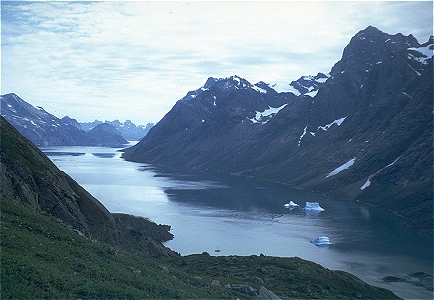
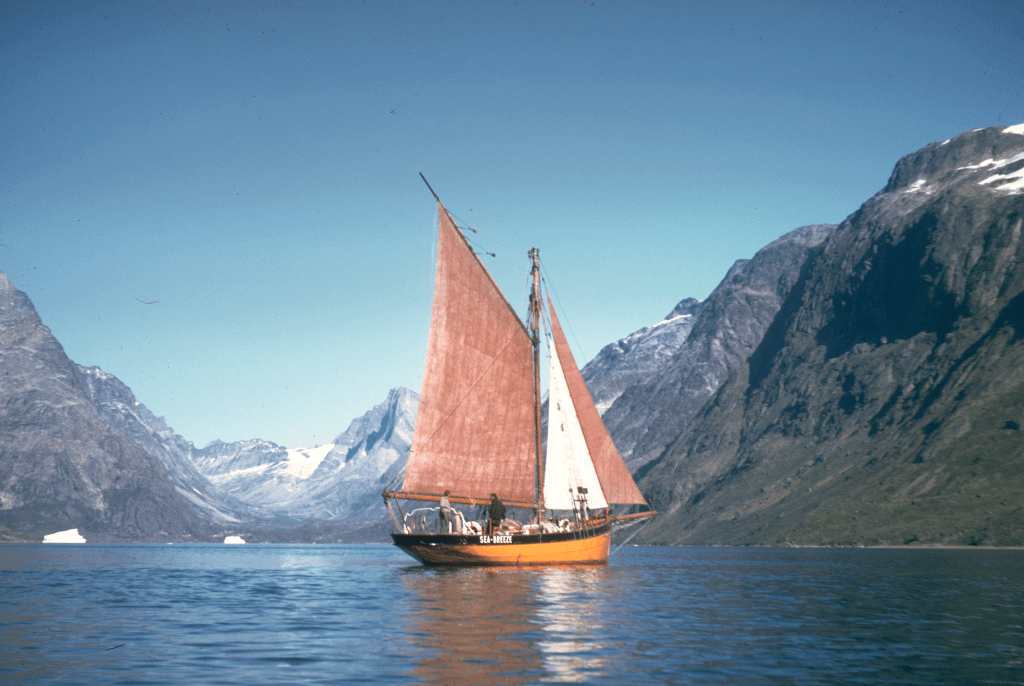
    The anchorage in Tasermiut, a beautiful valley off Prins Cristian Sund in Southern Greenland, provided a tranquil setting for a few days climbing for Colin and Iain, and a few days painting, deck caulking and other minor repairs for Andrew, the Skipper and myself. One afternoon, I took went for a quiet scramble up the side of the valley above the anchorage, and spent a happy hour or so just soaking in the cool sun and marvelling at the tranquility of the place. There were the remains of a Viking encampment down towards the shore of the fjord, and a beautiful variety of alpine flowers. Only the incongruous vapour trails from the transatlantic flights, which pass over Cape Farewell on a great circle route from Heathrow to New York, gave any hint that the so called civilised world was still out there. Of all the places I’ve been in the world since, few come close in terms of natural, unspoilt beauty.

    This view to the south down the valley showing Sea Breeze riding at anchor at the bottom of the frame, three small bergs aground close by. In the distance, Prins Cristian Sund runs East/West.

    We spent the last week of the cruise at this anchorage while Colin and Iain took off into the mountains in search of something to justify the climbing objective while the Skipper and I worked our way around the obvious, visible damage sites applying tingles, re-caulking deck seams and checking sails and rigging.  Andrew spent the time sorting out the remaining foodstuffs, checking the water supplies, the paraffin and meths for cooking and planning for the voyage home.

    barograph

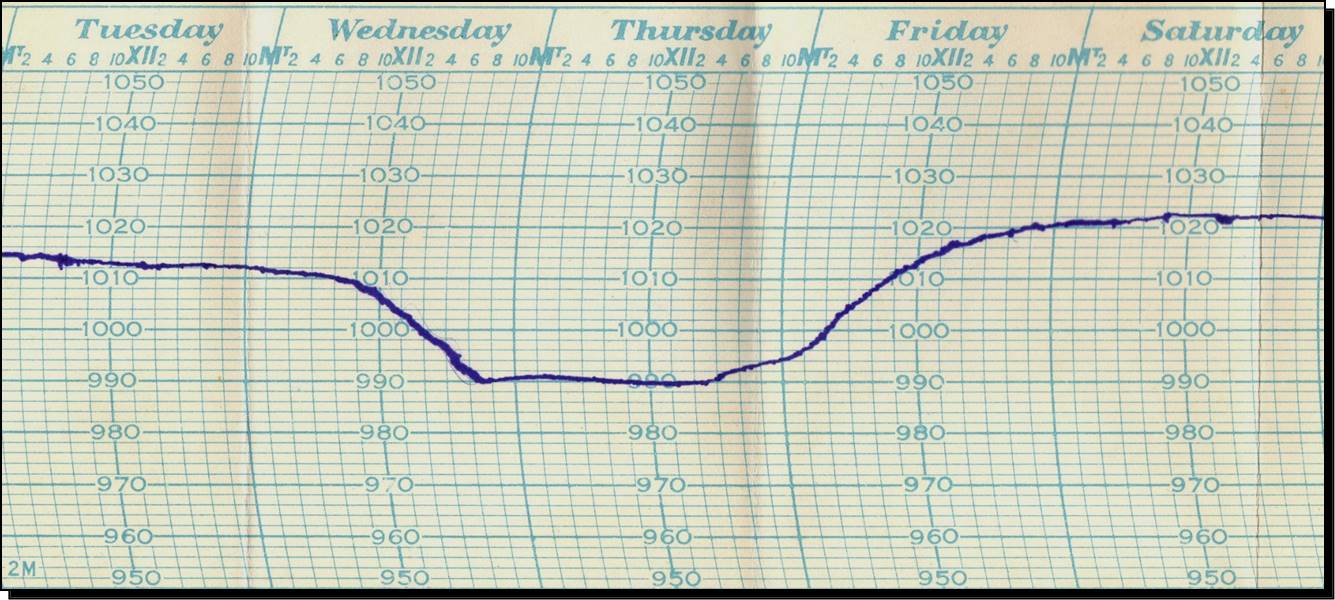
    That trip back across the Atlantic in 1970 is given rather more prominence than usual  in ‘In Mischief’s Wake’, even adopting a serious tone. In fact, she had a serious leak down below the waterline on the garboard strake, and numerous other smaller leaks – the result of a couple of months of fun and games in the ice.  I well remember the first couple of nights out from the coast, one of which had the crew fully occupied just keeping the boat secure in storm force winds. Hove to with just about 6 feet of luff left on the mainsail and the gaff clearly broken. During one watch on deck I’d lashed myself into the cockpit since there were serious seas breaking over the deck from time to time. Looking down into the companionway I could see Iain and the skipper taking turns at the bilge pump without a break while Andrew and Colin shifted stores and attempted to locate the leaks. We could do nothing about the gaff till the wind took off, and with Colin and Iain both running on two cylinders due to seasickness – we’d been two months away from real seas – things were pretty bloody desperate! I think I’d got beyond the stage of being scared, but still that steady smile round the Skipper’s unlit pipe seemed to restore order.

    For more notes on life aboard one of Tilman’s pilot cutters, take the menu option for ‘Life aboard‘ or simply click the link.

  • Life on board

    Life on board

    A few notes on life aboard Tilman’s Pilot Cutters

    This page contains notes on life aboard the Bristol Channel Pilot Cutter “Sea Breeze”, based on my experiences of the 1970 and 1971 Greenland voyages with Bill Tilman. If you’re here because you know of the subjects, then I need explain no more. However, if you’re just here out of idle curiosity, or perhaps a love of old traditional working boats, then read on.  Comments and suggestions welcomed. The Bristol Pilot Cutters worked in the Western Approaches to the English Channel at the end of the 19th and early 20th centuries. Competition to pick up vessels was fierce, and as a result these cutters developed a reputation as sound, fast sea boats in all weathers. During their working lives, these boats were sailed by one man and a boy – the pilot owner playing no role in the day to day running of the vessel. Tilman owned three of these vessels during his sailing years, “Mischief”, “Sea Breeze” and “Baroque”. “Sea Breeze”, being the most traditionally rigged and largely unaltered, provided a good insight into the workload of their original crews.

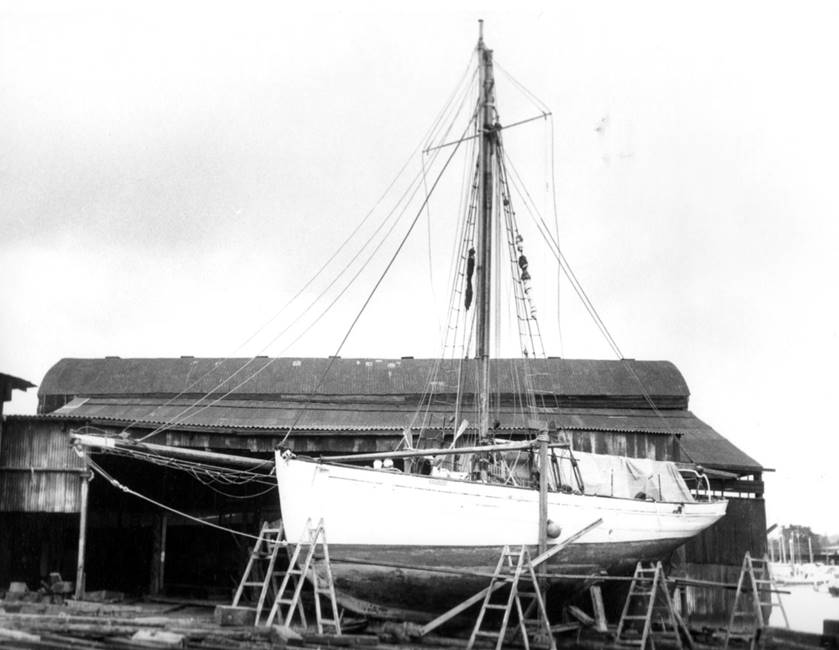
    Sea Breeze hauled out for a pre-sale survey at the Berthon Boat Co. yard in Lymington, 1968

    Bill Tilman pushed his pilot cutters well beyond their intended environment, his first voyage taking him south to Patagonia and a crossing of the ice cap. Mischief made several more southern ocean voyages and numerous excursions through pack ice into both the coast of Greenland and points north before being finally abandoned, sinking off the island of Jan Mayen following a disastrous encounter with ice in 1968 . After the loss of Mischief, Tilman understandably felt that any other cutter would always be second class in comparison, as a result, his initial views on Sea Breeze were far from complimentary. The 1969 voyage was clearly an unmitigated disaster given that she had lain little used, in inshore waters, for years previously. To make an Atlantic crossing and expect to accomplish anything of note was typically over ambitious.

    The 1970 trip, however, was a different matter. Some of the faults had been rectified, and with a good crew, the voyage was classed as one of his most enjoyable. By the time we returned to Lymington, he was already comparing her with Mischief in a far more favourable light – admitting that she did, in fact, have a number of advantages.

    Tilman’s satisfaction with Sea Breeze was complete by the 1971 trip, a voyage marred only by his dogged determination to attempt an ice-free entrance to Scoresby Sound. By the time Sea Breeze was lost the following year, he felt as close to this boat as he had to her predecessor. She was the oldest of the three, having been built by  Jackie Bowden of Porthleven in 1899, and also the most traditional in rig and fittings.

    Under Sail

    An old pilot cutter sails well, easily and safely in a reasonable wind in open water but inshore needs much room to manoeuvre. Sea Breeze was at her best, and most satisfying, on a broad reach, with a reasonable sea running. In these conditions, you could lash the tiller and make only minor corrections to the helm throughout a two hour watch, leaving her to sail herself. At other points of the wind she was harder work. While it provided a couple of hours of amusement trying to get her to point close to the wind, the amount of leeway she made rendered this a fairly pointless – and in inshore waters dangerous – activity. Running before the wind required total concentration, with a boom that weighed close to a ton with its reefing gear and a gaff that from the cockpit looked like a toothpick. Tilman himself makes much of losing spars, but the fact that the gaff on Sea Breeze was brought down on three out of her four trips speaks more of design than lack of seamanship. The weight of the mainsail, coupled with rolling brought about by running down heavy Atlantic seas late in the summer, caused the gaff enormous stress with an inevitable end result.

    Watch keeping

    Once at sea, we set two hour watches with a single crew member having full responsibility on deck for the duration of the watch. With a sailing crew of four and a full time cook, this worked well, enabling a good mix of work and rest and ensuring that we were fit for anything the weather threw at us. By way of illustration, the watch rota from the 1970 trip looked like:

    With the cook taking the afternoon watch each day, the rest of the crew watches moved forward by two hours. In heavy ice, or in inshore waters where the manoeuvrability of the boat required two pairs of hands, we doubled up on watches. Otherwise, she was sailed single-handed on watch, extra hands only being called for sail changes which, given the size of the gaff main and the weight of the traditional flax canvas, must have taxed to the limit the abilities of the original ‘man and a boy’ crew.

    When in the ice, all hands would normally be on deck. One at the masthead spotting clear leads, the others attempting to fend the boat off small pieces of ice. At night, which was more of an extended dusk during the high summer, we would hand the sails and moor to a convenient ice floe until morning – enabling most of the crew to get some sleep before the next days sailing.

    Since we normally only worked six hours of the day, there was plenty of time during the outbound Atlantic crossings to relax and read. Between us, we had a large library of fiction, enough to keep us all distracted for the duration. In fair weather, the crew would scatter themselves around the deck, a favourite reading spot being the dinghy along with a comfortable assortment of sails and ropes. Usually the man on watch would have a companion in the cockpit, discussing a variety of topics as wide and varied as the content of the ‘library’. In foul weather or heavy seas, the off duty crew would retreat to their bunks and read, mealtimes then becoming the social high points of the day.

    The return crossings tended to have less time for leisure pursuits, being mostly taken up with general repairs to leaks opened up during a summer in the ice. Also, with the onset of August, the North Atlantic gales tended to keep us occupied with repairs to both canvas and spars.

    The subject of food

    The role of the cook on these voyages was one which I never envied. As well as planning and preparing meals for five from a limited portfolio of ingredients, he had to manage the reserves of fresh water and also – in all weather – took the afternoon watch each day which enabled the gradual rotation of watches over time.

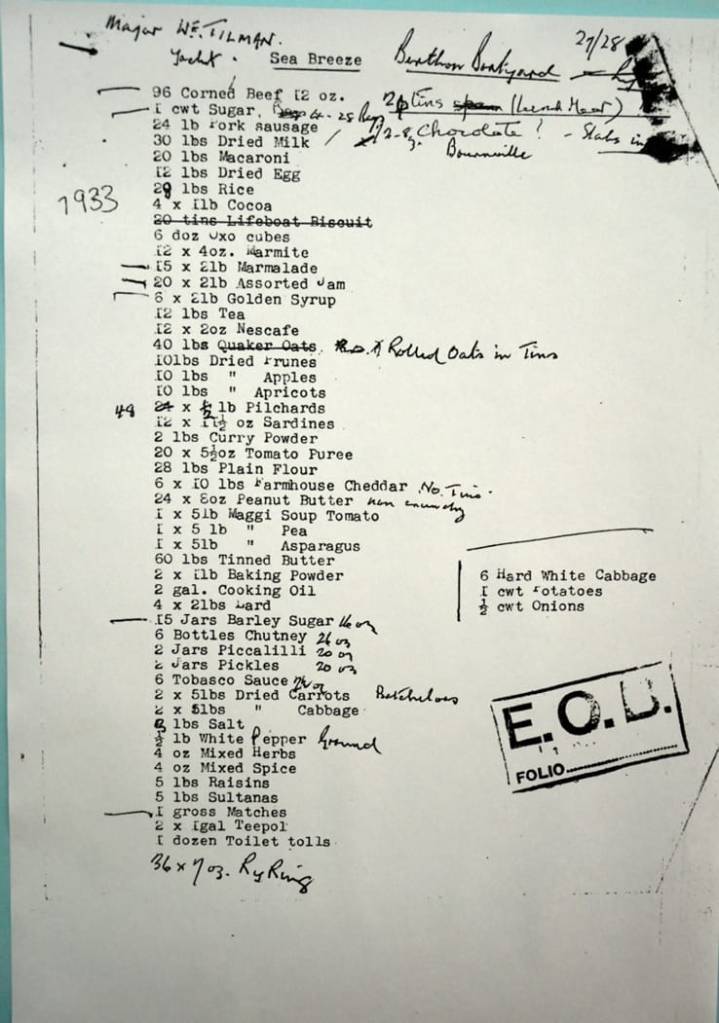
    To emphasize the problem facing the cook, the following list shows the basis of the ships stores for a four month voyage. Tilman’s attitude towards expedition fare has been written about at length by far more auspicious writers than this, but much of the apparent frugality of our diet could be put down to the need to sensibly use the limited stowage space available. At the start of the voyage, all of the stores had to packed under seats, floors and bunks – tins with their labels removed and identifying marks painted on them, vegetables and bread in a locker in an open area near the fore peak. Locating and retrieving the ingredients for a meal required forward planning by the cook – especially if a key ingredient was located under the bunk of a crew member recently off watch!

    Heading up the stores manifest, eight dozen tins of corned beef, from which the cook could fashion a variety of stews, pasta sauces and curries.  Four dozen tins of pilchards and four dozen  tins of sardines, along with half a dozen 10lb farmhouse cheddar cheeses gave a variety of options for lunch.  Dried eggs provided a breakfast alternative, while dried vegetables in the form of carrot and cabbage, often made up with part sea water to preserve the fresh water stock, gave us our ‘five a day’.  During the 1971 voyage, an encounter with a Norwegian whaling ship north of Iceland provided some welcome relief from the bully beef.

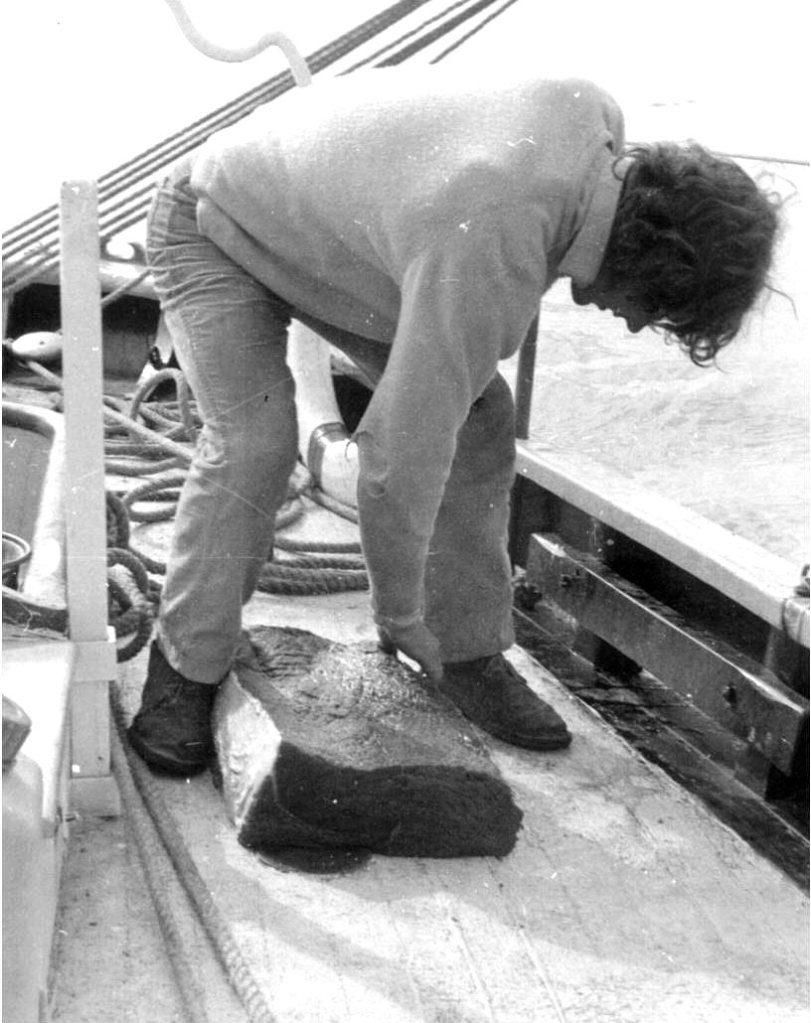
    Marius, cook on the 1971 voyage, eyes up a piece of whale meat passed to us from a Norwegian whaler

    On the outbound Atlantic passage, the tins and dry supplies were supplemented by a stock of hard white cabbages, potatoes and onions, all of which lasted well when stored in a dark and preferably dry place. We also sailed with a store of ‘double baked’ bread, white loaves cut into 1 inch slices and double baked for longevity.  Such bread would normally last for three to four weeks.  In Greenland, we usually managed to stock up with black rye bread, which had a remarkable lifetime, taking a month or so before it started to turn green around the edges.  In addition, the boats carried a supply of Lifeboat Biscuits in tins, which the cook would ration out with a lunch of cheese, sardines or pilchards once the on board bread had either been consumed or had gone too mouldy to contemplate.

    Tabasco sauce was a Tilman essential. Anything could be made edible with the inclusion of a few drops and he laced most meals heavily with it – hardly complimentary to the cook!  As part of the deal for Sea Breeze, he had also inherited a seemingly endless supply of tins of “Sir Athol Oakley’s Stew”.  These kept appearing in the corners of various lockers during the 1970 trip, and frankly needed the Tabasco to render them edible.

    The limited fresh water supplies on board also required close and constant management by the cook.  On both trips  we ran low on fresh water, despite cooking and washing with sea water.  Both times, as the pictures here illustrate, we had to resort to unusual means for replenishment.  In 1970, having been kept off shore by an unusually heavy belt of pack ice, we used rainwater and melt water from the pack itself to replenish the tanks.  

    A long drawn out job but arguably easier than in 1971 where we had to row backwards and forwards with plastic jerrycans of water drawn from a nearby stream. In the picture above, you can just make out the ice axe and the saucepan used to scoop up the melt water and in the shot below, a rudimentary dam is just visible, complete with plastic piping and plastic cans slowly filling.

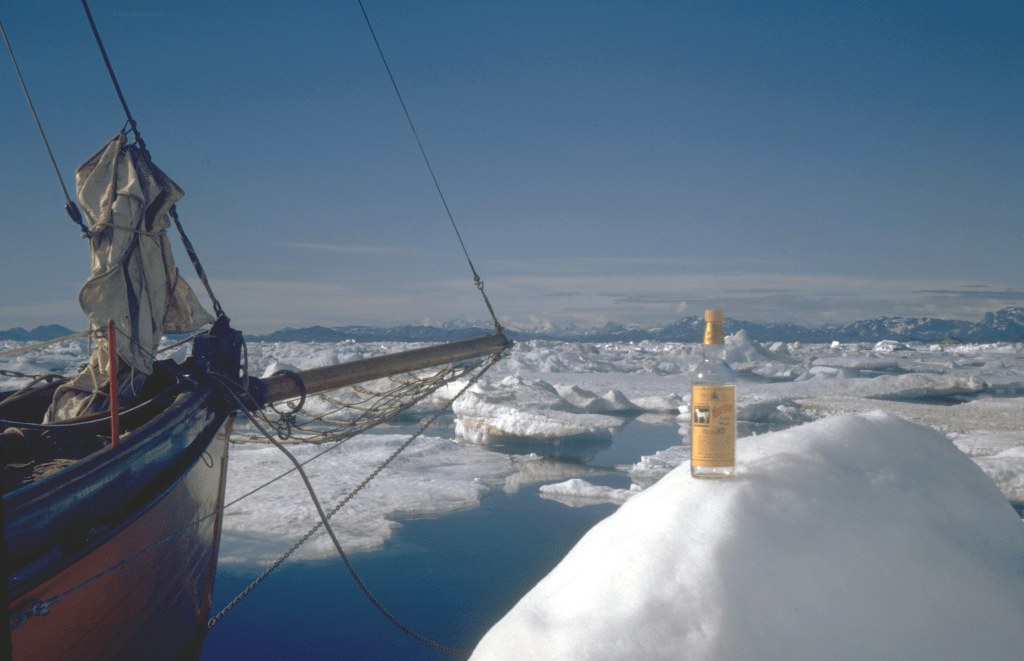
    In addition to the food and water, we took on bonded stores including tobacco for the crew plus 2 Cases of White Horse Whisky, 2 Cases of Four Bells Rum and 2 Cases of Gordon’s gin. Drinks were brought out on Saturday evening, before the evening meal. Since the only mixer available was a large glass flagon of lime juice, spirits were mostly drunk neat – except for ice, which we had in abundant quantity. In higher latitudes, when the situation was favourable, we would take an ice axe to a convenient floe in order to provide a slight air of sophistication to the Saturday evening cocktail.

    On one occasion at a peaceful fjord anchorage one Saturday evening, I rowed over for the ice with a bottle of Scotch. Framing a photograph with a glacier in the background, Sea Breeze in the middle distance, and a bottle of White Horse on a floe in the foreground, I had high hopes of making a fortune on the advertising market.

    White Horse, at the time, were running a series of advertisements on the theme of ‘You can take a White Horse anywhere’. On my return from the 1970 trip, a penniless student at the University of Wales, I sent the distiller a copy of the slide along with a suggestion for its use in their campaign. The response was singularly disappointing.

  • Introduction

    Introduction

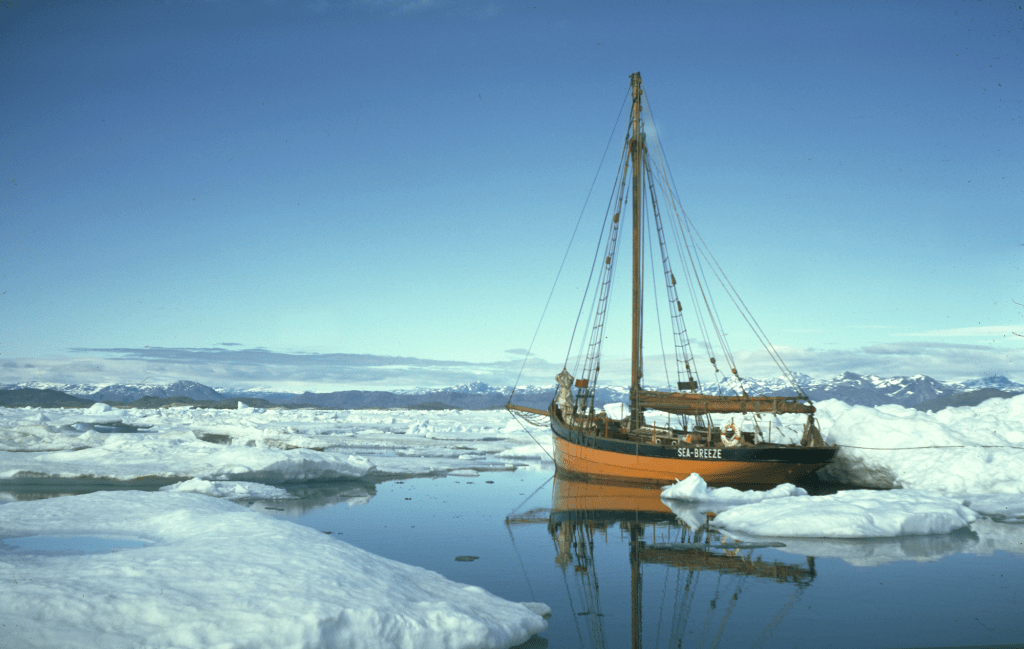
    © Bob Comlay - Sea Breeze in the south-west Greenland pack ice, July 1970
    Bill Tilman, 'First ascent of the season', off the west coast of Greenland in 1970.  © Bob Comlay